

Introduction
Functional fitness exercises have become increasingly popular because they train the body to move efficiently and safely. Among these exercises, the kettlebell windmill stands out as a powerful movement that improves strength, flexibility, and balance at the same time. Many athletes and fitness enthusiasts include this exercise in their routines to build a strong and stable core while improving shoulder and hip mobility.
Unlike traditional strength exercises that isolate a single muscle group, this movement trains several muscles simultaneously. It also develops coordination and body awareness, which are essential for injury prevention and long term fitness progress. Because of these advantages, trainers often recommend the kettlebell windmill exercise as part of a complete kettlebell workout routine.
In this guide, you will learn what this exercise is, the muscles it targets, its main benefits, and how to perform it step by step. You will also discover common mistakes, useful variations, and practical tips that help beginners perform the movement safely.
What Is a Kettlebell Windmill
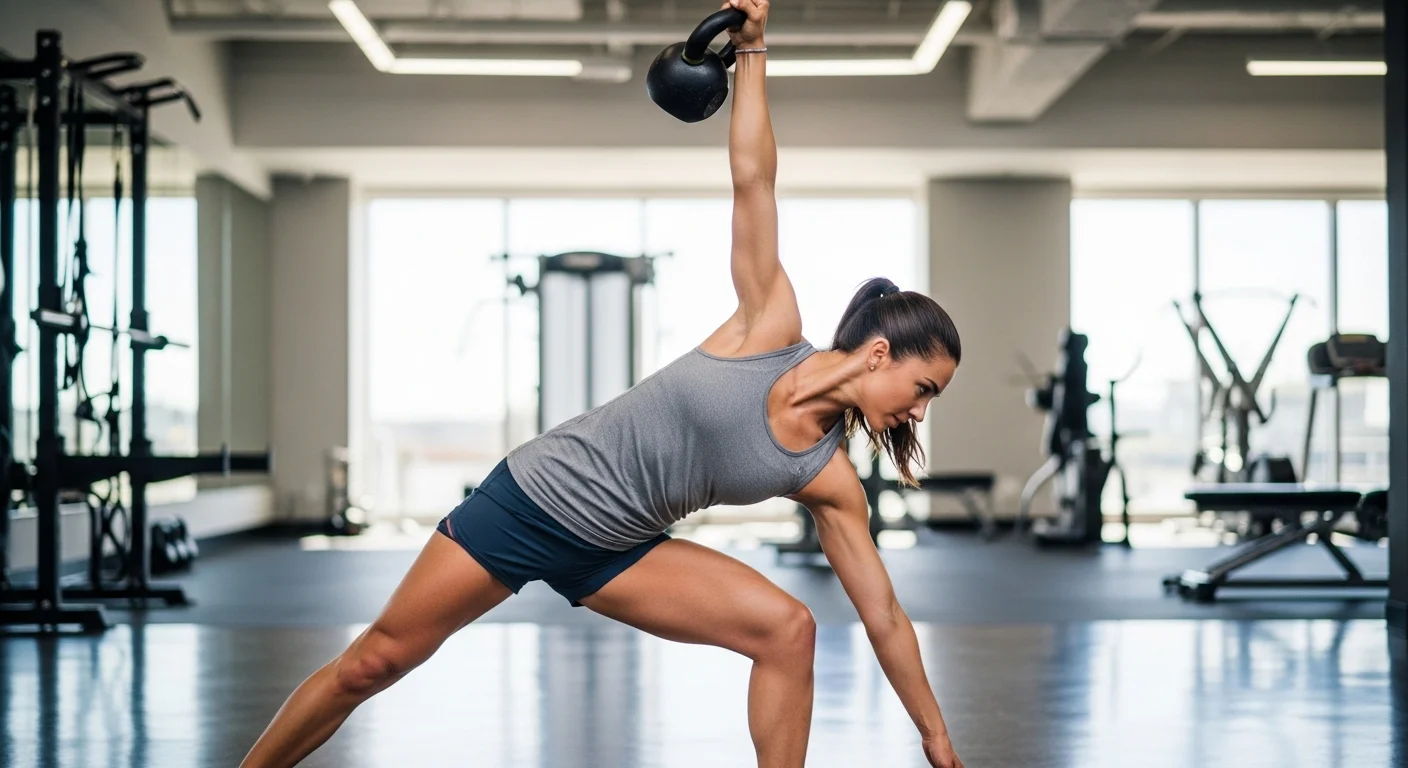
The kettlebell windmill is a functional strength exercise performed while holding a kettlebell overhead and bending at the hips to lower the torso toward the floor. This movement requires controlled flexibility and stability while keeping the arm extended above the shoulder.
The exercise is widely used in kettlebell training because it combines elements of strength training, mobility training, and balance. Instead of relying only on the arms, the body works as a coordinated unit. The hips hinge backward, the torso rotates slightly, and the core stabilizes the entire movement.
Fitness professionals often classify the kettlebell windmill as a mobility and stability exercise. It strengthens the core while improving shoulder alignment and hip flexibility. For this reason, it is commonly included in functional fitness programs and strength training workouts.
Another advantage of this movement is that it trains the body to maintain stability under load. Holding the weight overhead challenges shoulder stability and helps improve posture during other overhead kettlebell exercises.
Muscles Worked in the Kettlebell Windmill
Primary Muscles
Several major muscle groups work together during this movement. The most active muscles include the obliques, which play a key role in stabilizing the torso. These core muscles help control the rotation and bending of the body as you lower toward the floor.
The shoulders are also heavily involved because the kettlebell remains overhead throughout the movement. The deltoids and rotator cuff muscles maintain stability and support the weight above the head.

Glutes contribute to the hip hinge movement. They help maintain balance and control as the body lowers and rises during each repetition.
Secondary Muscles
Although the core and shoulders perform most of the work, several supporting muscles assist the movement. Hamstrings help control the hinge at the hips, while the lower back muscles provide stability for the spine.
Core stabilizers also remain active during the entire exercise. They keep the torso aligned and prevent unnecessary twisting or bending that could lead to injury.
Because so many muscles are involved, the kettlebell windmill exercise can be considered a full body movement that strengthens both the upper and lower body.
Benefits of the Kettlebell Windmill
Improves Core Strength
One of the biggest advantages of this movement is its ability to strengthen the core muscles. The obliques and deep stabilizing muscles work continuously to maintain proper alignment. This helps develop stronger core stability that supports many other exercises.
Enhances Shoulder Stability
Holding a kettlebell overhead requires strong shoulder control. Over time, this exercise helps improve shoulder stability and can contribute to better performance in overhead lifts and other strength training movements.
Increases Hip Mobility
Limited hip mobility is a common problem for many people who sit for long periods. This exercise encourages a deep hip hinge and gentle rotation, which helps increase flexibility and improve movement patterns.
Builds Balance and Coordination
The body must remain stable while shifting weight and lowering the torso. This challenge improves coordination and balance, which are important for both athletic performance and everyday activities.
Supports Functional Fitness
Functional fitness focuses on movements that mirror real life activities. Because this exercise trains the body to bend, stabilize, and control weight simultaneously, it fits perfectly into a functional training routine.
How to Do the Kettlebell Windmill Step by Step
Starting Position
Stand with your feet slightly wider than shoulder width. Turn the foot on the side of the kettlebell slightly outward while keeping the other foot at a comfortable angle.
Hold the kettlebell overhead with one arm fully extended. Keep your eyes on the weight to maintain shoulder alignment and balance.
Proper Movement Technique
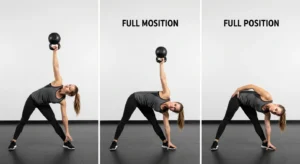
Slowly push your hips backward while lowering your torso toward the floor. At the same time, slide your free hand down the inside of your leg. Focus on hinging at the hips rather than bending forward at the waist.
Keep the arm holding the kettlebell straight and stable. Your shoulders should remain stacked, with the weight positioned directly above the shoulder.
Returning to the Starting Position
Once your free hand reaches your shin or the floor, pause briefly. Then press through your hips and return to the standing position in a controlled manner.
Maintain a steady pace and avoid rushing through the movement. Proper control is more important than speed when performing this exercise.
Common Mistakes to Avoid
Many beginners struggle with technique when first learning this movement. One common mistake is rounding the back while lowering the torso. This can place unnecessary stress on the spine and reduce the effectiveness of the exercise. Another mistake involves using a kettlebell that is too heavy. Starting with excessive weight can compromise shoulder stability and make it difficult to maintain proper form.
Some people also bend the arm holding the kettlebell. The arm should remain straight throughout the movement to keep the shoulder stable and aligned. Losing focus on the hip hinge is another frequent issue. Instead of bending forward, the movement should come primarily from pushing the hips backward.
Kettlebell Windmill Variations
Low Windmill
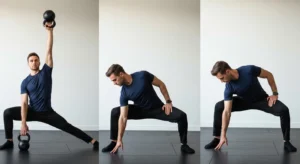
In this variation, the kettlebell remains in the lower hand while the upper arm reaches toward the ceiling. This version is often easier for beginners to learn.
High Windmill
The traditional variation keeps the kettlebell overhead while the torso lowers toward the floor. This version requires greater shoulder stability and core strength.
Half Kneeling Windmill
This modification reduces the balance challenge and allows beginners to focus on proper technique and mobility.
Double Kettlebell Windmill
Advanced lifters sometimes use two kettlebells to increase the challenge. This variation requires excellent stability and should only be attempted after mastering the basic movement.
Tips for Beginners
Learning the correct technique is essential when starting any new exercise. Beginners should begin with a light kettlebell or even practice the movement without weight. This allows the body to learn the correct hip hinge and torso alignment.
Another helpful strategy is to perform mobility drills before attempting the exercise. Stretching the hips and shoulders can improve flexibility and make the movement feel more natural.
Practicing slowly also improves control. Instead of rushing through repetitions, focus on maintaining stability and balance throughout the entire movement. Consistency plays an important role as well. Performing the exercise regularly helps develop coordination and strength over time.
Safety Tips for the Kettlebell Windmill
Safety should always be a priority during strength training. Warming up the shoulders and hips before performing this exercise helps reduce the risk of injury. Maintaining proper posture is equally important. Keep the spine neutral and avoid twisting excessively during the movement.
If you feel discomfort in the shoulder or lower back, stop the exercise and reassess your technique. Reducing the weight or practicing the movement without a load may help correct the issue. Controlled breathing also supports safe execution. Inhale while lowering your torso and exhale as you return to the starting position.
How to Add the Kettlebell Windmill to Your Workout
This exercise can fit into several types of training routines. Many athletes include it in their warm-up sessions because it prepares the body for more demanding movements.
It also works well as part of a core strengthening routine. Performing three sets of eight to ten repetitions on each side can help build core stability and improve mobility. Some trainers use it as a mobility exercise at the end of a workout. This helps stretch the hips and shoulders while reinforcing proper movement patterns.
Who Should Avoid This Exercise
Although this movement offers many benefits, it may not be suitable for everyone. People with shoulder injuries should consult a professional before attempting it, since the exercise requires strong overhead stability. Individuals with severe lower back pain should also approach the movement cautiously. Practicing mobility exercises first may help improve flexibility and reduce strain.
Beginners with very limited hip mobility may find the movement challenging at first. In such cases, starting with simpler mobility drills can help build the foundation needed to perform the exercise safely.
Final Thoughts
Functional training exercises can transform the way the body moves and performs. The kettlebell windmill is an excellent example of a movement that combines strength, flexibility, and balance in a single exercise.
When practiced with proper technique and appropriate weight, it can improve core stability, shoulder control, and hip mobility. These benefits make it a valuable addition to many fitness routines.
With patience and consistent practice, beginners can gradually master this movement and enjoy its long term advantages for strength and overall fitness.






Leave a Reply