

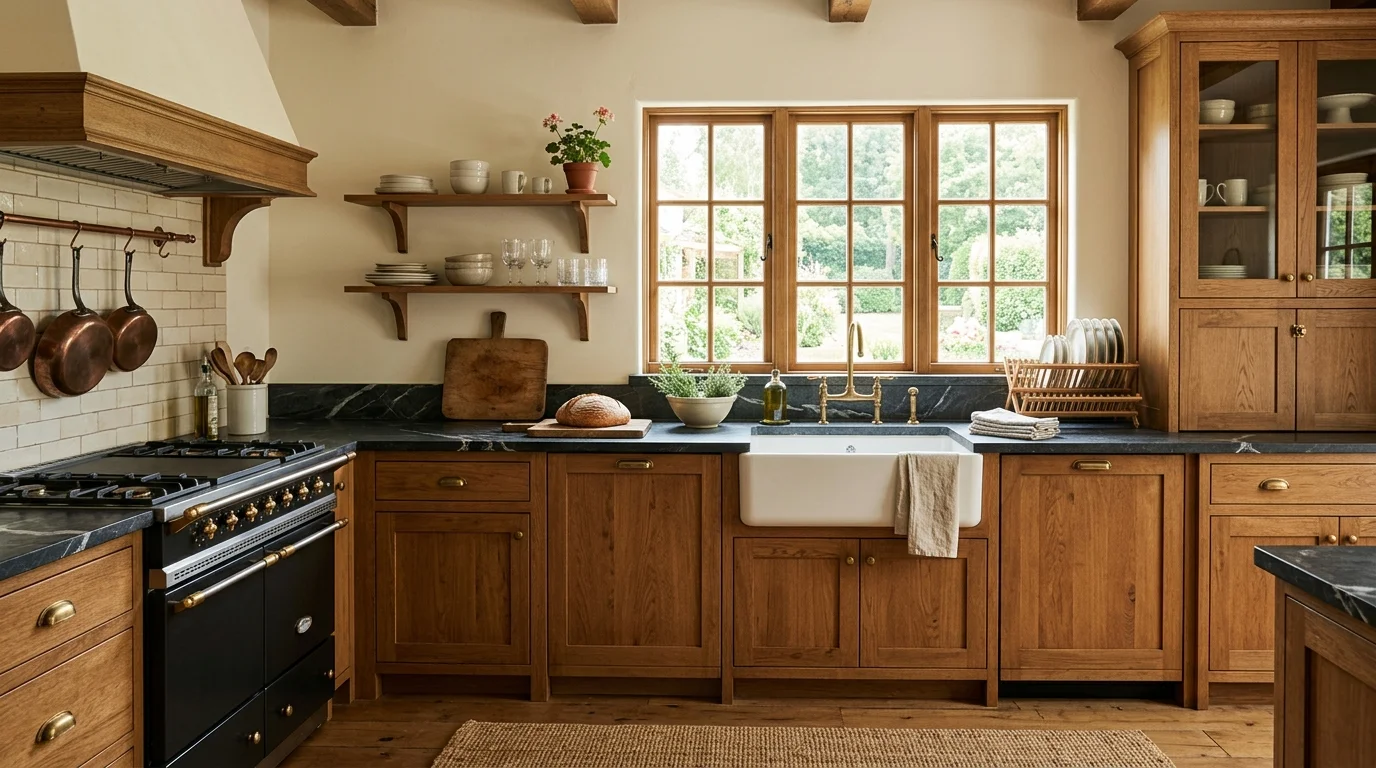
Natural stone surfaces bring unmatched character to any kitchen space. In particular, few materials carry the rich heritage of authentic soapstone. Quarried for centuries, this architectural stone creates a warm, vintage aesthetic. Best of all, it only improves with age. Yet, many homeowners hesitate after installation. They worry that a minor spill or the wrong cleaning bottle might ruin their investment. Fortunately, learning how to clean soapstone countertops is refreshingly straightforward. To begin, you must realize that soapstone behaves differently from marble or granite. It never demands fussy chemical sealers or costly specialty polishes.
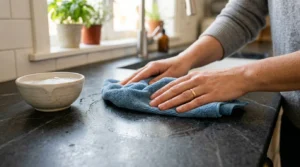
To clean your soapstone countertops daily, mix a few drops of mild dish soap into warm water. Next, wipe the surface with a soft microfiber cloth. Then, rinse the stone with fresh water and dry it completely with a clean towel. Because soapstone is non-porous and chemically inert, basic daily maintenance takes less than two minutes.
The Science of Soapstone: Why It Cleans Differently Than Granite or Quartz
To master how to clean soapstone kitchen countertops, you should examine the stone’s geology. Soapstone, technically called steatite, consists primarily of talc, magnesite, and chlorite. This distinct blend gives the material its signature silky feel. Consequently, it holds a soft rating of 1 to 3 on the Mohs hardness scale.
Because of this high talc content, soapstone scratches more easily than granite or engineered quartz. However, it boasts an incredible superpower that harder stones lack. Specifically, soapstone has zero porosity. Liquid cannot penetrate this dense material. Therefore, bacteria, raw meat juices, and red wine simply rest on top of the slab. They never sink into internal microscopic pores.
Why Soapstone Resists Stains and Acid Etching
This unique density brings us to the biggest misconception about natural stone care. In short, soapstone counters do not actually stain. When you spot dark marks near a cooktop, you are not seeing permanent damage. Instead, you are seeing surface cooking oils that have settled on the exterior.
Furthermore, soapstone is completely chemically inert. Because of this property, it does not etch when exposed to harsh acids like lemon juice or vinegar. Ultimately, mastering how to clean soapstone countertops is stress-free. You never need to race against the clock to stop chemical burns.
Daily Routine: The Safest Way to Clean Soapstone Countertops
A gentle wash cycle keeps your counters smooth and free of greasy fingerprints. When homeowners research how to clean soapstone countertops, they often assume they need expensive stone formulas. In reality, basic household supplies work best.
Safe Cleaning Tools to Keep on Hand
-
High-density microfiber cloths for washing and streak-free buffing
-
Mild, pH-neutral liquid dish soap (such as classic Dawn or plant-based soap)
-
Warm tap water
-
Soft cellulose sponges for gathering loose food crumbs
Daily Step-by-Step Cleaning Process
First, brush away loose crumbs and dry debris with a soft cloth. Next, dampen a sponge or microfiber towel in warm water mixed with mild dish soap. Wipe down the entire surface using gentle circular motions. In addition, pay extra attention to prep zones where cooking oils gather.
After washing, rinse your cloth thoroughly with clean water. Wipe down the counters a second time to remove any leftover soap film. Finally, buff the entire surface dry using a fresh microfiber towel. Taking the time to dry the stone prevents tap water minerals from leaving pale evaporation marks.
Chemical Compatibility Table
| Cleaning Agent | Safe on Soapstone? | Effect on Stone | Effect on Patina & Oil |
| Mild Dish Soap | Yes | Safe, non-reactive | Leaves oil finish intact |
| Rubbing Alcohol (70%) | Yes | Safe, sanitizing | Slightly lightens surface oil |
| White Vinegar | Yes | Chemically inert | Cleans surface dirt cleanly |
| Mineral Spirits / Acetone | Yes | Safe degreaser | Completely strips oil and wax |
| Chlorine Bleach | Use Caution | Does not harm stone | Causes uneven blotchiness in patina |
| Abrasive Scouring Pads | No | Scratches soft talc | Leaves visible white abraded patches |
Deep Cleaning and Stain Removal: Grease, Grime, and Residue
Even though the stone is non-porous, dried food spills can cling tenaciously to a honed finish. Consequently, handling these stubborn spots requires a targeted approach rather than aggressive scrubbing.
When dried sauces refuse to budge, avoid reaching for heavy green scouring pads or abrasive cleansers. The talc in soapstone will scratch under heavy pressure. Instead, place a warm, damp microfiber cloth directly over the hardened spill for five minutes. As a result, the moisture softens the dried sugars or fats. You can then wipe the residue away without any surface scratching.
Removing Grease Marks on Bare Stone
If you have un-oiled soapstone counters, hot butter or oil splatters will leave dark splotches. However, this is not a permanent stain. The stone has simply darkened in that specific spot.
To remove these localized grease marks, create a paste using baking soda and warm water. Spread the paste over the spot and let it sit for twenty minutes. During this time, the baking soda draws out the trapped oil. Afterward, wipe the area clean with a damp cloth.
Using Acetone for Sticky Buildup
For stubborn adhesive residues, pure acetone serves as an outstanding, pro-grade degreaser. It is also ideal when a previous oil layer breaks down unevenly.
Simply apply a small amount of acetone to a clean cotton rag and wipe the surface. Because acetone evaporates quickly, it will not damage the natural stone. However, it will temporarily reset that section back to its original pale gray color.
Erasing Hard Water Rings Around Sinks
Around kitchen sinks, hard water can deposit calcium and magnesium over time. These minerals often leave chalky white lines across the dark stone. Fortunately, you can dissolve these mineral crusts with common white vinegar.
Dampen a soft cloth with vinegar and gently rub the buildup. Unlike marble, which dissolves instantly under vinegar, soapstone does not react to acids. Once the crust breaks down, rinse the area with fresh water. Finally, dry the surface and apply a drop of mineral oil to restore a balanced tone.
Kitchen Sanitization: Disinfecting After Food Prep Without Stripping Finish
Home cooks who prepare raw poultry need to know how to clean soapstone countertops for family food safety. While soapstone naturally resists bacteria due to its dense body, routine surface disinfection remains an important habit.
Many people reach for pre-packaged disinfectant wipes like Clorox or Lysol. However, these products contain harsh industrial solvents. While these chemicals will not erode the underlying stone, they do dissolve topical oils. Consequently, wiping a dark soapstone island with standard bleach wipes often leaves chalky, faded streaks behind.
The Safest Disinfection Protocol
For regular, food-safe disinfection, keep a spray bottle of 70 percent isopropyl alcohol nearby. Alternatively, you can use a 3 percent hydrogen peroxide spray. Both options sanitize your counters effectively without damaging the stone.
First, wash your prep zone with mild dish soap and warm water. Next, mist the surface with your rubbing alcohol spray. Let the liquid sit on the stone for sixty seconds before wiping it dry. As a result, this simple habit kills common kitchen bacteria like Salmonella and E. coli. Furthermore, the alcohol evaporates cleanly and protects your beautiful patina.
Scratch Repair and Surface Restoration
Because soapstone is softer than granite or quartzite, everyday kitchen life will leave occasional marks. Heavy cast iron skillets, ceramic bowls, and stray cutlery can scratch the surface. Fortunately, repairing soapstone is easier than fixing any other counter material. In fact, most minor scuffs disappear in seconds.
The Thumb Rub for Minor Scuffs
Light surface scuffs rarely gouge the stone slab. Instead, they simply disrupt the dry wax or mineral oil layer, creating a bright white line. For tiny marks, press your thumb firmly against the scuff. Then, rub briskly back and forth across the line.
The natural warmth and oils from your skin are often enough to blend the mark into the surrounding stone. If that mark persists, dip a cotton swab into food-grade mineral oil. Dab the scratch lightly, wipe away the excess oil, and watch the line disappear.
Wet-Sanding Moderate Grooves
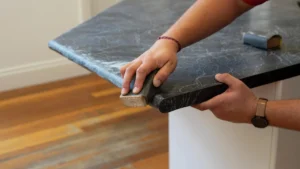
When a dropped knife leaves a noticeable groove, you can sand the stone directly at home. Take a sheet of 120-grit wet sandpaper. Next, lubricate the spot with a splash of water or a few drops of mineral oil. Sand the scratch using gentle, overlapping circular motions. In addition, keep your sanding zone slightly wider than the scratch to blend the edges evenly.
Once the scratch sits level with the surrounding counter, wipe away the wet stone dust. Then, switch to a finer 220-grit sandpaper to match the original honed texture. Finally, wipe the counter clean, let it dry, and re-treat the freshly exposed stone with oil or wax. Within twenty-four hours, the repaired section blends seamlessly.
Repairing Chipped Edges
If a heavy pot bangs against an outside counter corner, it may knock off a small chip. Even so, you do not need to call a stone fabricator. Instead, save any stone dust created from your sanding projects in a small cup.
Mix this stone dust with clear, two-part epoxy until you create a thick paste. Fill the chipped corner with the paste and allow the adhesive to cure completely. Next, gently wet-sand the hardened patch flush with 220-grit sandpaper. Finally, apply a drop of mineral oil to match the surrounding stone.
Protecting the Patina: Mineral Oil vs. Soapstone Wax
A critical part of learning how to clean soapstone countertops is knowing how to care for their color. Many new owners believe that applying mineral oil acts as a protective sealant.
However, soapstone requires no chemical sealers. Oiling or waxing your countertops is an entirely cosmetic choice. Left completely untreated, soapstone sits at a light gray color with soft green undertones. Over time, exposure to cooking fats and regular use causes the stone to darken naturally. Homeowners apply topical treatments simply to accelerate this process, transforming the slab into a rich, dark charcoal finish.
Mineral Oil vs. Soapstone Dry Wax Treatments
-
Food-Grade Mineral Oil: This classic, budget-friendly option penetrates the top surface dust and creates an instant dark tone. However, mineral oil evaporates over several weeks. In your first year of ownership, you must reapply oil every four to six weeks to keep an even shade. Moreover, it can leave a slightly wet residue if you do not buff it down thoroughly.
-
Soapstone Dry Wax: Wax treatments require more physical effort to buff across the stone. However, they last much longer than plain liquid oil. The wax hardens into a silky, dry matte finish. Therefore, it does not pick up dust, rub off on clothing, or show light water rings as quickly as oil does.
If you prefer the historic gray appearance of untreated stone, you can skip oil and wax entirely. Simply follow our basic guide on how to clean soapstone countertops using mild soap and water. Over the decades, the bare stone will age naturally and develop its own unique kitchen patina.
Thermal Care and Hot Pan Maintenance
One of the greatest benefits of soapstone is its exceptional heat tolerance. For generations, builders used soapstone to construct wood stoves, laboratory tables, and firebrick hearths. Consequently, it handles high kitchen temperatures without burning, scorching, or melting.
You can take a hot sheet pan straight from the oven and set it directly onto your soapstone counters. It will never leave yellow scorch marks behind. Nevertheless, wise kitchen owners still exercise caution near slab seams.
While the stone slab tolerates extreme heat easily, the color-matched epoxies used to join countertop seams can weaken under sudden thermal shock. Therefore, avoid placing blazing-hot pots directly across two joined slabs. Similarly, keep hot cookware away from the caulk line behind your slide-in range. Using a simple wooden trivet near joints protects your kitchen installation for decades.
FAQs
Can you use Dawn Powerwash on soapstone countertops?
Yes, but use it sparingly. Dawn Powerwash contains alcohol-based solvents that cut through heavy grease quickly. It will not harm the stone, but it will strip away your mineral oil or wax layer. If you use it on an oily stove area, you will likely need to re-oil that spot to restore its dark patina.
Do soapstone countertops ever need to be sealed?
No, soapstone should never be coated with chemical stone sealers or polyurethane finishes. Because the stone has zero internal pores, penetrating sealers cannot soak into the slab. Instead, they dry into a cloudy, sticky film that you must strip away with harsh solvents.
What is the best daily cleaner for soapstone?
The best daily cleaner is simple warm water mixed with a few drops of mild liquid dish soap. When applied with a soft microfiber cloth, this basic solution removes food dirt and cooking grease easily. Best of all, it protects your finish without leaving harsh chemical residues behind.
Why do my soapstone counters look cloudy or chalky?
Cloudy patches usually mean that the top mineral oil treatment has evaporated. Alternatively, hard water minerals may have dried on the surface. A quick wash with soap and water, followed by a fresh layer of mineral oil or wax, will quickly restore that rich, even dark tone.
Ultimately, understanding how to clean soapstone countertops comes down to embracing the natural qualities of the stone. By sticking with gentle soaps for daily washing, sanitizing safely with rubbing alcohol, and buffing out minor scratches with fine-grit sandpaper, your soapstone counters will remain clean, functional, and gorgeous for generations to come.











Leave a Reply