

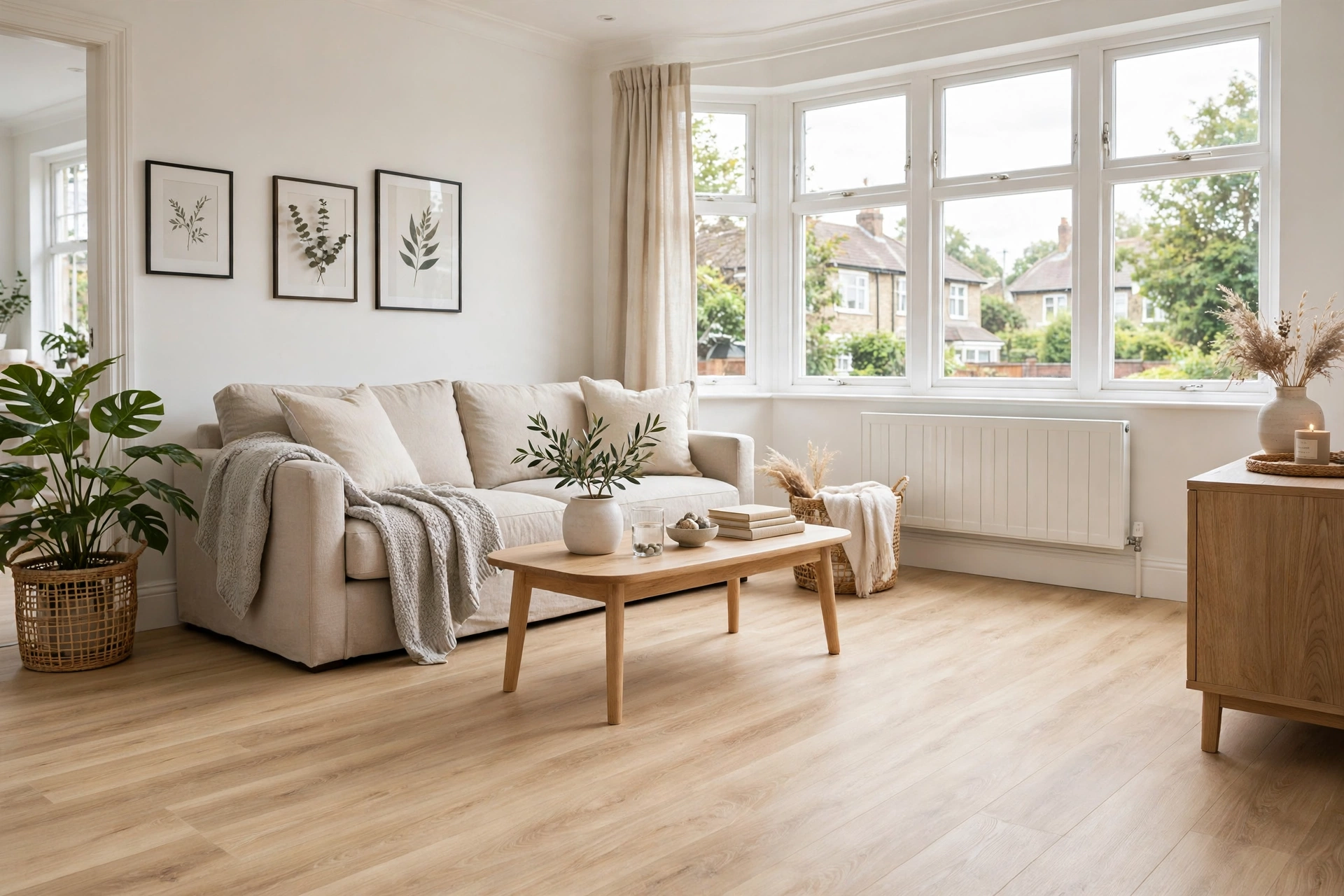
Laminate flooring is a printed wood or stone design on a hard fibreboard plank. It suits most UK living rooms, bedrooms and hallways. This guide explains the types, colours and styles on sale. Finally, use it to pick boards that fit your room, your light and your budget.
Types of Laminate Flooring: Wood, Stone and Tile Effects
At its simplest, laminate is a photograph of wood, stone or tile. Printers put that image on a hard fibreboard core, then a clear wear layer seals it. As a result, two boards can look alike yet wear very differently. Wood-effect boards lead the market, with oak, walnut, pine and ash among the common designs. Laminate tile flooring suits kitchens and hallways, because the printed tile pattern hides crumbs and splashes. Laminate tiles come in square and rectangular formats, and some ranges add a bevelled edge. Light wood tones suit small flats and north-facing rooms. Indeed, pale boards bounce light around a room and make a narrow space feel wider. First, pick the effect that fits the room, then choose the colour.
Bright Rooms, Honest Upkeep: White Laminate Flooring and White Wood Flooring
White boards suit bright, modern rooms and small spaces that need light. White wood flooring gives the same pale look with a softer grain. Both pair well with grey sofas, oak tables and black metal frames. However, white shows dirt fast, and footprints, dust and pet hair stand out on a pale floor. For example, a white floor in a hallway shows muddy prints within a day. The same floor in a spare room stays clean for a week. Choose a matt or lightly textured finish to hide marks, because gloss shows every scuff. Next, keep a soft brush by the door for quick sweeps. Finally, wipe spills at once with a well-wrung damp mop, and never use a steam mop.
Light Oak Laminate Flooring for Living Rooms
Light oak is the most popular choice for living room flooring in the UK. Similarly, it suits plain modern rooms and cosy country looks alike. Natural oak laminate flooring gives a warmer tone with more grain. Light laminate flooring in pale ash or whitewashed oak feels cooler and more modern. White oak laminate flooring sits between the two with a soft grain. First, check the tone against your sofa and curtains in daylight. Shop lights can flatter a board that looks cold at home.
In fact, light oak flooring also hides dust better than white or very dark boards. For instance, a pale oak floor with a matt finish hides crumbs well, while gloss dark floors show them. In addition, light oak pairs well with grey, navy and sage walls. You can change décor without changing the floor. Choose wide planks for a large room, because narrow boards can look busy.
Dark Wood, Dark Oak and Black Wood Flooring
Dark laminate flooring brings warmth and drama to large rooms with good light. However, it can shrink a small dark room. Dark wood laminate flooring in walnut or smoked oak suits period homes. Similarly, it suits bold modern schemes. Dark oak laminate flooring sits between the two, with a deep brown tone that hides scuffs yet shows dust. Black wood flooring makes the strongest statement, so use it where the floor should lead the room. Solid brown laminate offers a cheaper route to the same deep look, with a flat brown tone. Meanwhile, dark oak flooring also works well in bedrooms, because a deep tone feels cosy under soft light. However, dark boards show dust, crumbs and pet hair, so they need a quick sweep as often as white boards. In a small room, pick dark boards only with a large window or pale walls to balance them.
Grey Wood Flooring and Grey Timber Flooring: Shades by Room
Grey wood flooring now suits almost any UK home. However, the shade you pick changes the whole room. Light grey boards lift a dark hallway or a north-facing bedroom. Meanwhile, mid grey suits living rooms with mixed light. Dark grey and charcoal boards feel smart in large kitchens, yet they show dust like dark wood. In fact, greige mixes grey and beige and warms a cool room. Grey timber flooring in a weathered finish suits country kitchens and coastal looks. If you like floorboards grey in tone rather than brown, look for a painted or whitewashed finish. A hardwood floor grey in colour costs far more than a printed board. In addition, shoppers often search for grey color wood flooring when they mean a cool-toned grey wood floor. For example, pale grey works best in small rooms, mid grey suits family rooms, and dark grey needs strong light.
Marble Effect and Tile-Effect Styles
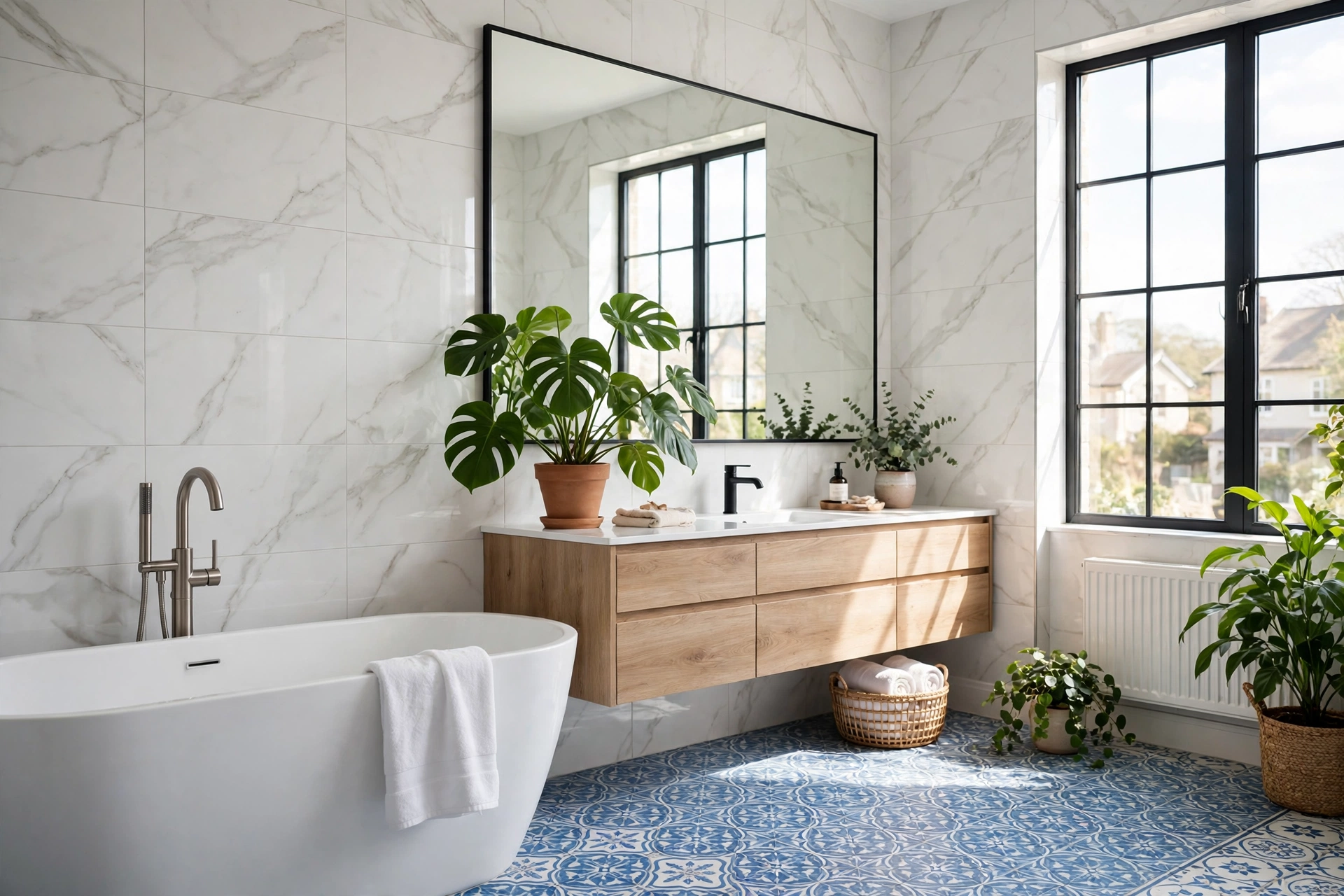
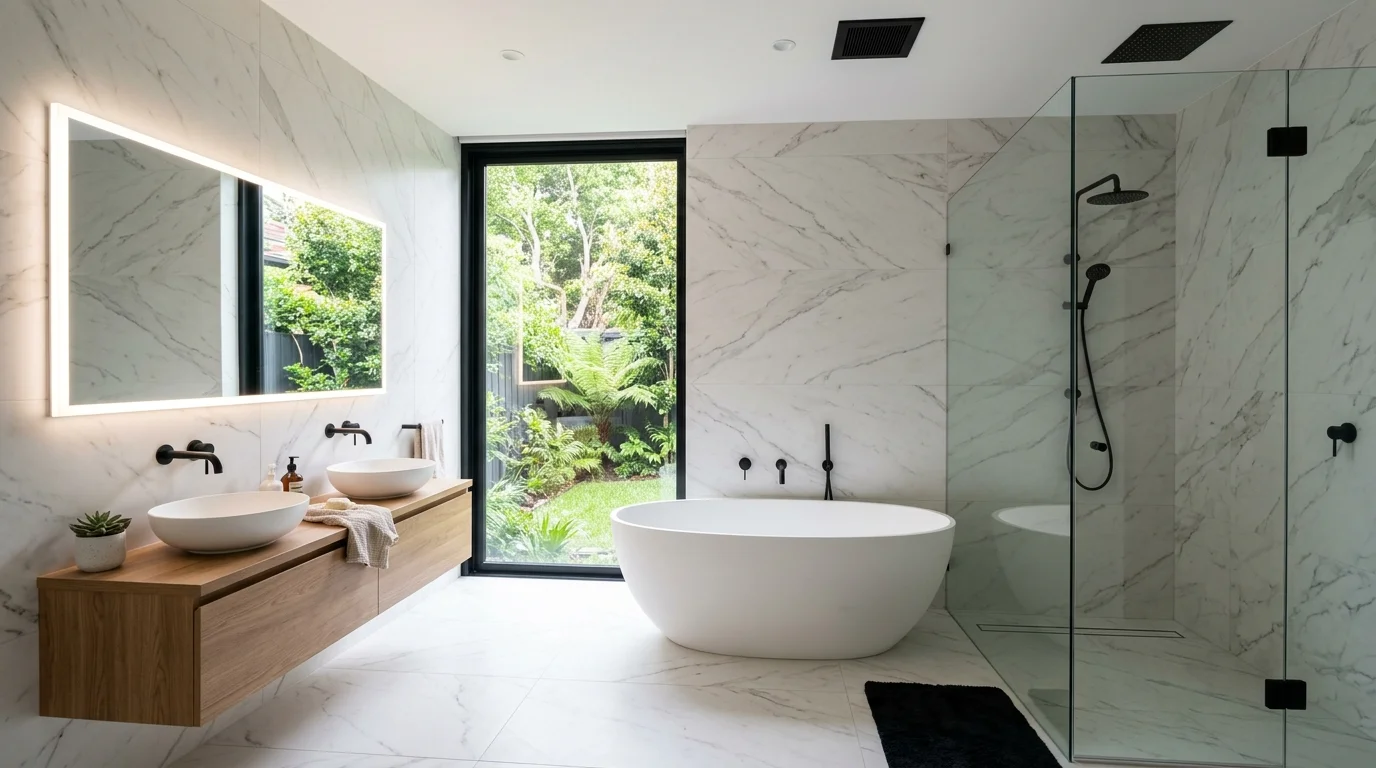
Marble effect laminate flooring brings a stone look to rooms where real marble would cost too much. For instance, white marble with grey veins suits kitchens in a water-resistant range. Stone-effect boards also copy slate and concrete. In addition, they pair well with matt black taps and plain white walls. Tile-effect boards give the same smart look at a lower price. Choose a large tile format for fewer grout lines and a calmer look. Small tiles can look busy in a tiny room. Similarly, a polished stone look suits modern kitchens, while a rough slate look suits country halls. Then keep spare boards from the same batch, so a damaged tile can be swapped for a matching one.
8mm Laminate Flooring: Is It Thick Enough?
Boards usually measure 7mm to 12mm thick. 8mm boards sit in the middle as a common standard choice. They feel solid underfoot in bedrooms and living rooms. Thicker boards, at 10mm or 12mm, feel firmer and deaden sound better. Overall, thickness helps, yet board quality matters more than thickness alone. For example, 8mm boards work well in a spare bedroom or a quiet living room. A hallway with dogs, kids and muddy boots will wear them faster. Therefore, step up to 10mm or 12mm boards with a strong wear layer. As a result, you pay a little more now and replace the floor years later. Next, ask the shop for the wear-layer grade and the warranty length before you buy.
Rooms: Kitchens, Bathrooms and Bedrooms
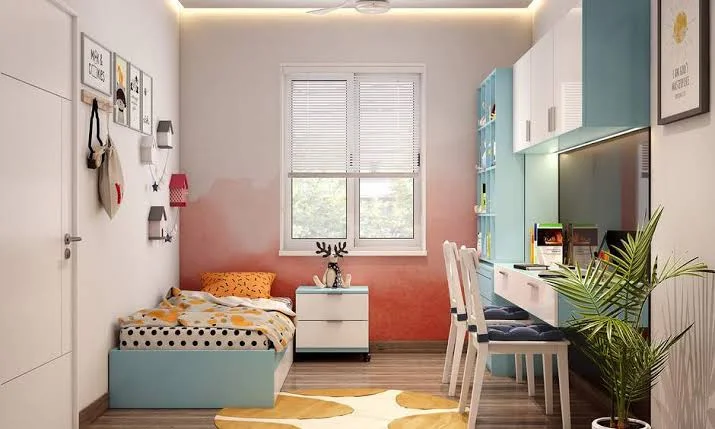
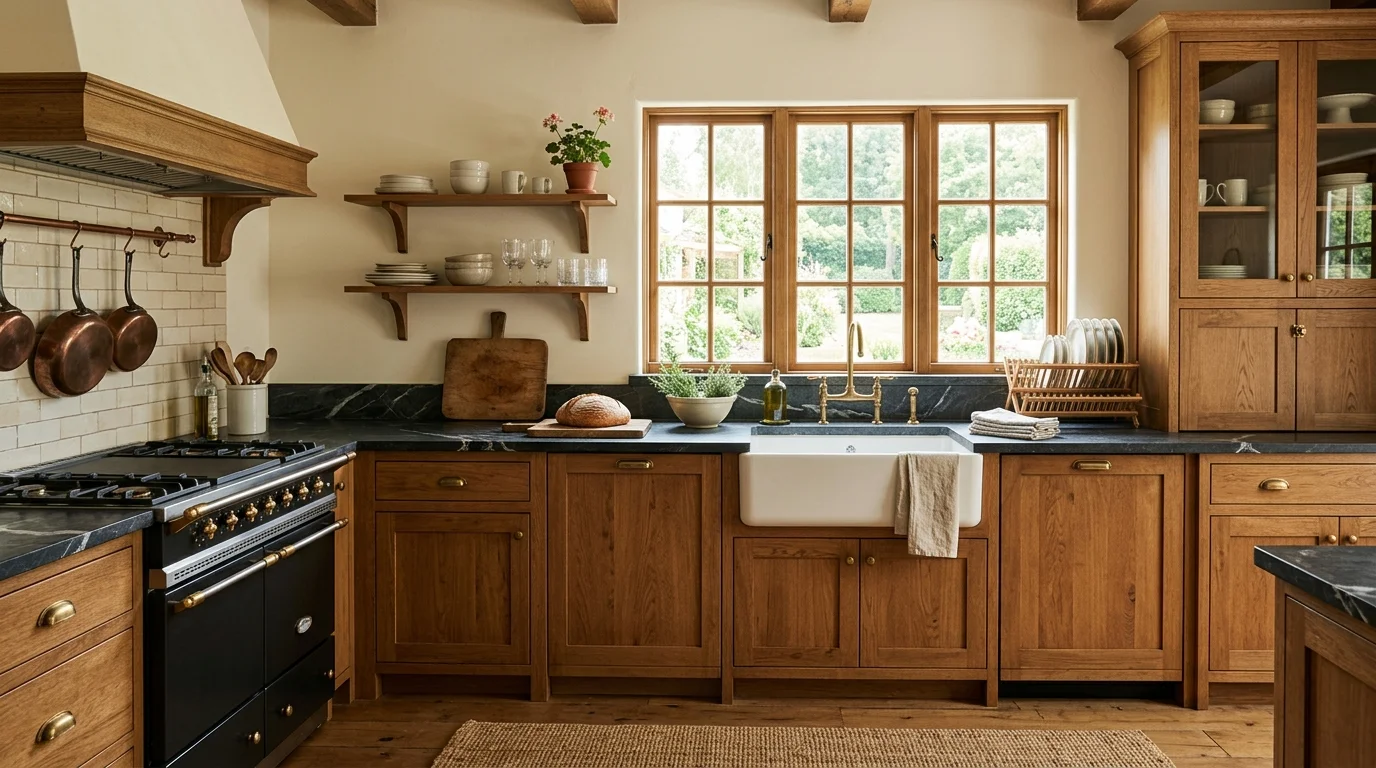
First, choose water-resistant boards for the kitchen. Spills and splashes reach the floor every day, so wipe up water at once. Bathrooms need more care, because steam and splashes test every joint. However, standard boards can warp in a damp bathroom. Instead, choose a water-resistant range or pick another floor type. If you want tiles in a bathroom, see our bathroom tiles guide for tile types, colours and choosing advice. Similarly, bedrooms suit nearly every board, because footfall is light and spills are rare. Light oak, grey or white boards all work well here, and a matt finish feels warm under bare feet. Hallways need tougher boards, because they take the most traffic in the house. In addition, mid-tone oak or grey hides dirt best in a busy entrance.
Pets and Underfloor Heating
Homes with pets need boards that resist claws and wipe clean fast. A strong wear layer stops most claw marks. In addition, light and mid-tone boards hide pet hair better than white or black boards. Wipe up accidents at once, because standing water can seep into joints and swell the core. For instance, keep a towel by the back door for muddy paws. Most boards work with underfloor heating. However, check the maker’s guidance before you buy. Thinner boards usually let heat through more easily, so 8mm boards often suit heated floors better. Meanwhile, keep the floor temperature within the maker’s stated limit. Never guess the limit, because too much heat can warp boards and void the warranty.
How Long Does It Last?
With normal care, good-quality boards often last 15 to 25 years. Cheaper thin boards wear sooner, often showing dull patches and chipped edges within a few years. Water, grit and heavy traffic shorten life most, so mats and felt pads slow that wear. Sweep often, wipe spills at once, and put felt pads under chairs and tables. As a result, the wear layer stays intact and the floor keeps its colour for years. Replace boards when the wear layer wears through or joints lift and will not sit flat. First, check your spare boards match in tone, because batches can vary a little.
Laminate Flooring vs Vinyl and Real Wood
Vinyl flooring handles water better than printed boards, so it suits bathrooms and utility rooms. On the other hand, real wood feels warmer underfoot, yet it costs far more and needs more care. Printed boards sit between the two and copy the wood look for less. However, they cannot be refinished, so a worn board must be replaced, not sanded. Choose vinyl if water is your main worry. Pick real wood for decades of use, and printed boards for the wood look on a budget. For example, a family living room suits printed boards, a bathroom suits vinyl, and a period hallway suits real wood. In short, match the floor to the room, not to the trend.
Frequently Asked Questions
What is laminate flooring?
It is a printed wood or stone design on a fibreboard plank. The print gives the look and the core gives strength.
What are the types of laminate flooring?
The main types are wood-effect, stone-effect and tile-effect boards. Wood-effect boards copy oak, walnut, pine and ash, while stone-effect boards copy slate, concrete and marble.
What thickness of laminate flooring is best?
8mm to 12mm works well for most rooms. First, choose 8mm for bedrooms and quiet rooms. Choose 10mm for busy rooms and 12mm for hallways.
Is 8mm laminate flooring thick enough?
Yes, for bedrooms and living rooms with normal footfall. For hallways, step up to 10mm or 12mm boards with a strong wear layer.
Is laminate flooring good for kitchens?
Yes, if you choose a water-resistant range and wipe spills at once. Standard boards can swell if water sits on the joints.
Can you use laminate flooring in bathrooms?
Standard boards are not a good pick for bathrooms. Steam and splashes can warp them. A water-resistant range can work in a well-ventilated bathroom, yet vinyl or tile is safer.
Is laminate flooring good for bedrooms?
Yes. Bedrooms suit nearly every board, because footfall is light and spills are rare. For example, light oak, grey or white boards all work well here.
What is the difference between laminate flooring and vinyl flooring?
Printed boards copy wood or stone on a fibreboard core. They resist scratches well, yet they dislike standing water. Vinyl handles water better and suits bathrooms.
How long does laminate flooring last?
Good-quality boards often last 15 to 25 years with normal care. Water, grit and heavy traffic shorten life, so sweep often and use felt pads.
Choosing Your Laminate Flooring
Start with the room, then pick the colour and thickness to match it. Light boards lift small dark rooms, while dark boards warm large bright ones. 8mm boards suit quiet rooms, while thicker boards suit hallways. Check the wear layer and the warranty first.








Leave a Reply