

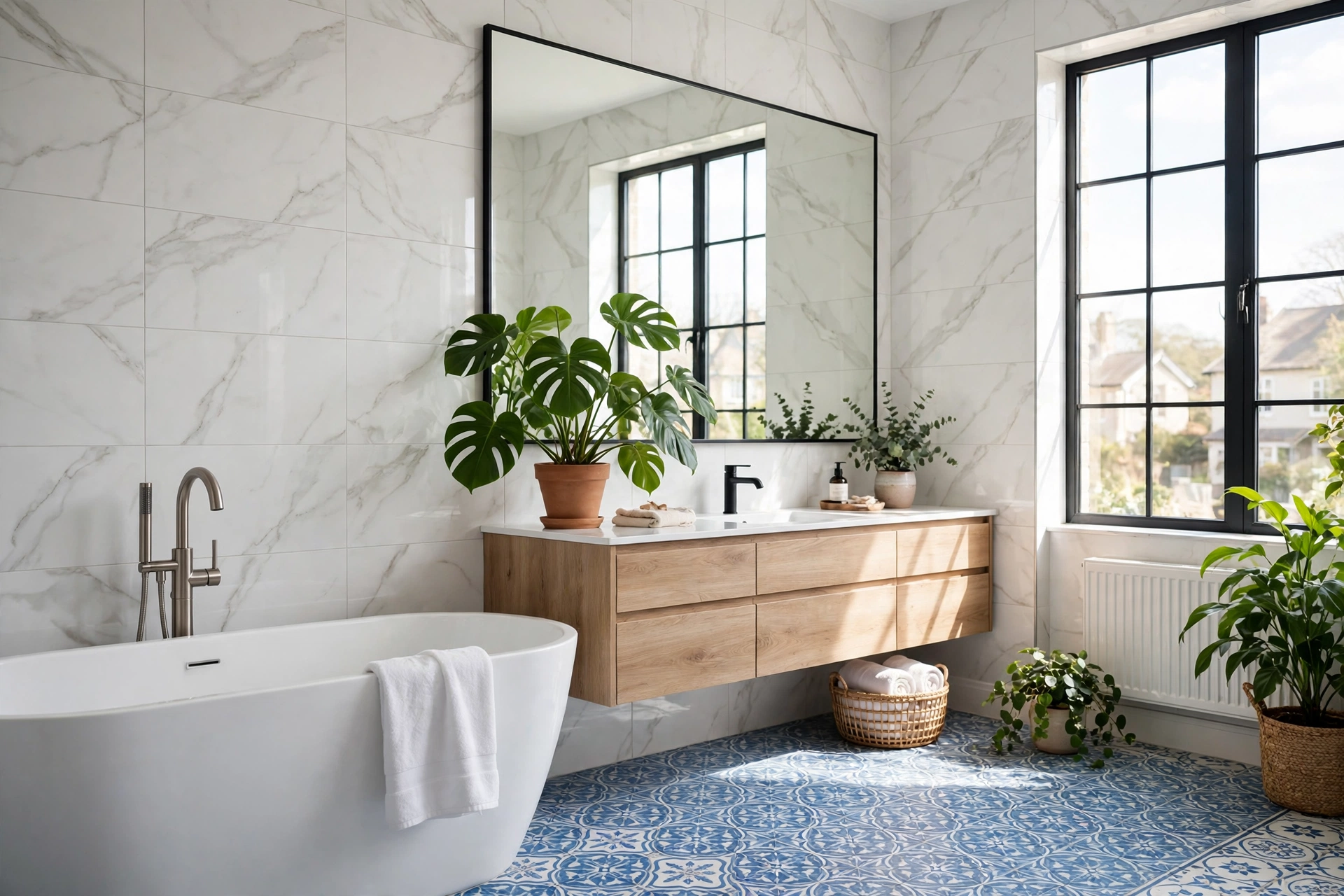
Good tiling can turn a plain bathroom into a calm, bright room. Bathroom tiles protect walls and floors from water, and they set the whole style of the room. This UK guide compares the main tile types, colours and finishes. It also shows you how to choose the right finish for walls, floors, showers and bath panels.
Tiling Basics: Where Tiles Work Best in a Bathroom
Tiles work hardest where water lands. Walls around the bath and shower need a waterproof surface. Floors need a surface that grips under wet feet. Splashbacks behind basins catch splashes all day. For example, full-height tiling suits a shower area, while half-height tiling suits a basin wall. In contrast, a painted wall suits a dry corner. First, map the wet zones in your room. Next, choose a hard-wearing finish for those zones. Finally, save softer or decorative finishes for dry walls.
Ceramic Bathroom Tiles: The Everyday Choice
Ceramic suits most UK bathrooms. They come in a huge range of colours, sizes and patterns. They cost less than porcelain or stone, and they clean with a quick wipe. Ceramic works well on walls, and it suits floors in lighter-use rooms. For example, a glazed ceramic wall tile shrugs off splashes and steam. However, unglazed ceramic can stain, so check the finish before you buy. Next, order a sample and test it at home. Finally, check that the floor feels firm underfoot and carries a suitable finish.
Porcelain Bathroom Tiles: The Hard-Wearing Option
Porcelain is dense, tough and very water resistant. They suit floors, shower walls and busy family bathrooms. Porcelain also copies other materials well: wood-effect, stone-effect and marble-effect porcelain all look convincing. In fact, marble effect tiles in porcelain give you the marble look without the sealing and upkeep. Porcelain feels harder underfoot than ceramic, and it suits underfloor heating well. Next, ask the supplier whether a tile suits floors or walls. Finally, remember that porcelain can chip if a heavy object drops on an edge, so handle it with care.
Natural Stone and Marble Effect Tiles
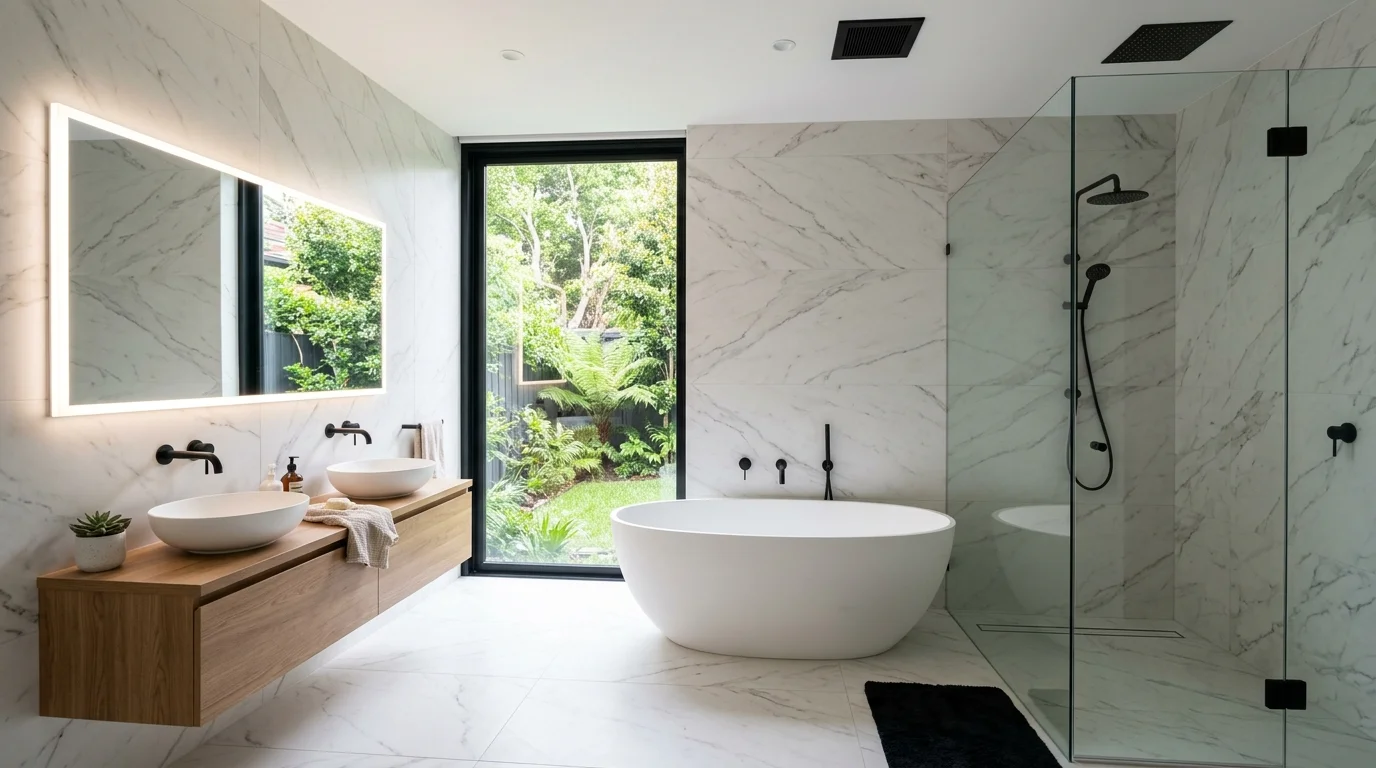
Real marble brings a luxury feel to a bathroom. White marble tiles with soft grey veining suit both classic and modern rooms. However, real stone needs sealing and regular care. It can stain, and it can feel cold underfoot. Marble effect tiles solve most of that. They copy the veining and tone of real marble, yet they need no sealing. Marble effect bathroom tiles work on walls and floors alike. Marble effect floor tiles give a large room a seamless, high-end look. A white marble tile also suits a bath surround or a feature wall. For example, pair white marble tiles with plain white walls for a calm, bright finish. In short, choose real stone if you love natural material and accept the upkeep. Choose marble effect if you want the look with less work.
Glass, Mosaic and Metro
Glass bounces light around a room. They suit splashbacks, shower niches and feature strips. Mosaics come in small squares or hexagons on a mesh sheet. They grip well under wet feet, so they suit shower floors. Metro designs are small rectangles, usually laid in a brick pattern. They suit period bathrooms and modern rooms alike. For example, a white metro tile with a coloured grout line adds charm to a plain wall. Next, use mosaics on curved surfaces, where large formats cannot bend. Finally, keep glass and mosaic to accent areas if you want to control the budget.
Patterned Tiles: How to Use Them Well
Patterned tiles add character fast. They suit floors, feature walls and splashbacks. A bold pattern can carry a whole room, so use it with intent. Patterned bathroom floor tiles work best when the walls stay plain. For example, a monochrome geometric floor pairs well with white walls and a simple bath panel. In contrast, pattern on every surface can feel busy. Next, test the pattern with a sample tile in your own light. Finally, buy a few spares: patterned designs are harder to match later.
Tiling Small Bathrooms: Large or Small Tiles?
Small tiles in a small bathroom can look fussy if the pattern is busy. Yet small formats suit shower floors and splashbacks, where grip matters. Large formats suit small rooms too. Fewer grout lines make a wall look calmer and the room feel bigger. Modern bathroom tiles often come in large sizes for exactly this reason. Light colours help as well. For example, pale walls with a darker floor can lift a windowless room. For more bathroom floor ideas, try a large pale floor tile with a darker wall tile. In short, match the tile size to the surface, not just the room size.
White Bathroom Tiles: The Classic Choice
White bathroom tiles suit almost any style. They reflect light and make a small room feel bigger. White tiles in a bathroom also pair with any colour of sanitaryware. A single white tile with black veining can add drama without dark walls. White and black tiles together create a classic monochrome look. For example, black bathroom tiles on the floor with white walls feel bold yet timeless. However, very pale surfaces show water marks, so wipe them often. Next, try a white tile in gloss for a bright wall, or in matt for a softer look. Finally, remember that they need a clean grout line to look their best.
Blue Bathroom Tiles
Blue bathroom tiles bring a calm, coastal feel. Pale blue suits small rooms, while deep navy adds drama. Blue tiles also hide water marks better than white. Blue wall tiles work well in a shower area or behind a bath. A blue tiled bathroom feels fresh with white sanitaryware and pale wood. For example, navy on one wall can anchor a plain white room. Next, pair blue with brass or chrome fittings. Finally, test the shade in your own light: blues can look greener or greyer than expected.
Green for a Natural Feel
Green tiles bring nature indoors. Soft sage suits calm, classic rooms. Deep emerald suits bold, modern rooms. Green tiles in a bathroom pair well with wood, brass and white. A green tile bathroom feels fresh and restful. Green floor tiles suit a large room, where the colour has space to breathe. For example, sage green on the walls with a pale floor creates a spa-like feel. Next, use green on one wall if a full room feels too much. Finally, check the tone in daylight and lamplight before you commit.
Beige, Brown and Marble-Effect Neutrals
Beige tiles warm up a cool bathroom. They suit wood, stone and white fittings. Brown tiles add depth without the drama of black. Coloured tiles in warm tones can make a large room feel cosy. Marble-effect neutrals bridge both worlds: a white marble tile with warm veining suits a beige scheme. For example, beige tiles on the floor with white marble tiles on the walls feel calm and warm. Next, mix warm and cool tones with care. Finally, order samples: beige can look pink or grey in different lights.
Tiling a Bath Panel and Choosing Bath Panels
A tiled bath panel turns a plain bath into a feature. It also hides pipework and adds storage. White bath panels suit most rooms and cost less than a tiled panel. However, a tiled panel matches the walls and looks built in. For design and layout ideas, read our washroom tiles design guide. Tile designs for a washroom often include a matching bath panel. Bathroom tiles design works best when the panel, floor and walls share a colour family. Dark tiles with white grout suit a monochrome panel. For example, a black tiled panel with white grout lines looks sharp against a white bath. Next, check access: a tiled panel should leave a hatch for the taps and waste. Finally, choose moisture-resistant boards behind the tiles.
Tiling Finishes: Matt, Gloss and Textured
Finish changes how a tile looks and feels. Gloss reflects light and suits walls. They also show water marks more clearly. Matt feels soft and hides marks well. They suit floors and calm rooms. Textured finishes add grip, so they suit wet floors and shower areas. For example, a textured floor tile feels safe under bare feet. Next, mix finishes with care: gloss walls with a matt floor works well. Finally, test the finish with wet hands before you choose.
How to Choose Bathroom Tiles: A Simple Checklist
Choosing tiles feels easier with a short checklist. First, list the wet zones: shower, bath surround and floor. Next, pick a hard-wearing tile for the floor and a lighter tile for the walls. Then choose a colour family and test samples in your own light. After that, check the finish: matt or textured for floors, gloss for walls. Finally, buy spares for future repairs. A tiling checklist like this keeps the project simple. It also stops costly changes later.
Tiling FAQs
What is the best tile for a bathroom floor?
Porcelain suits most bathroom floors. They resist water, wear well and clean easily. Textured porcelain adds grip in wet areas.
Do I need different tiles for walls and floors?
Yes, in most cases. Floors need more grip and strength, while walls can be lighter and smoother. Check the supplier’s guidance before you buy.
Are large tiles good for a small bathroom?
Yes. Large formats mean fewer grout lines, so walls look calmer and the room feels bigger. Small formats still suit shower floors and splashbacks.
What colour tiles make a bathroom look bigger?
White, pale blue and soft beige reflect light and help a small room feel open. Gloss finishes add to the effect.
Can I use patterned tiles in a small bathroom?
Yes, if you use them on one surface only. A patterned floor with plain walls adds character without making the room feel busy.
Can I tile a bath panel myself?
You can, if the panel is firm and moisture resistant. Many people hire a tiler for a neat finish, and a tiled panel needs an access hatch for taps and waste.
Good tiling starts with the right tile for each surface. Pick hard-wearing finishes for floors, waterproof surfaces for showers, and colours you love for the walls. Test samples in your own light, buy a few spares, and enjoy a bathroom that looks good for years.








Leave a Reply