

Introduction:
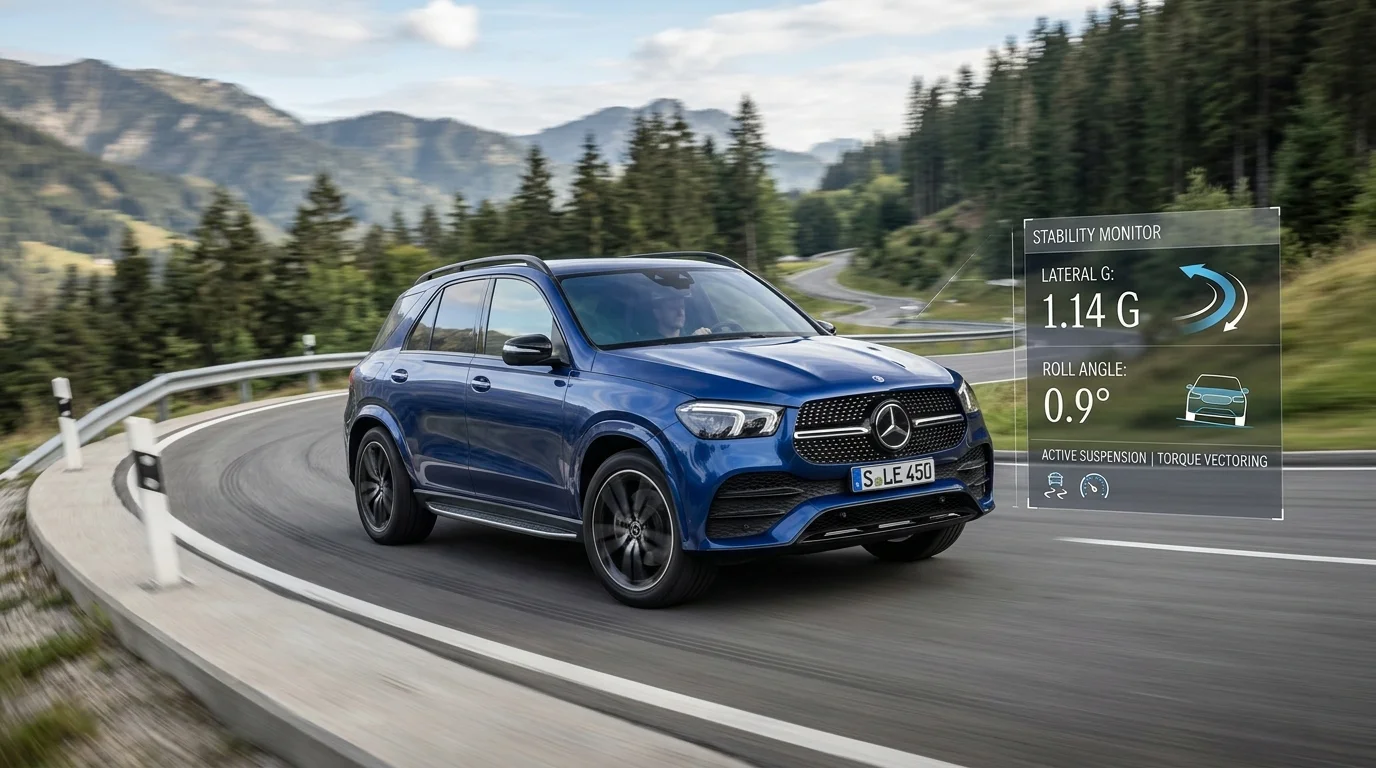
Modern vehicles now handle higher speeds, heavier loads, and more complex road conditions than ever before. When a car turns, physical forces push it outward, creating body roll and reducing stability. Engineers developed advanced solutions to solve this problem, and active cornering enhancement plays a key role in improving cornering safety and control.
Vehicle manufacturers combine mechanical suspension systems with electronic stability systems to reduce risk during sharp turns. These technologies are especially important in SUVs where higher center of gravity increases rollover chances.
What is Active Cornering Enhancement?
Active cornering enhancement is a vehicle stability technology designed to minimize body roll during turns by adjusting suspension behavior in real time. Unlike traditional suspension systems that remain passive, this system reacts instantly to steering input and road conditions. Hydraulic or electronically controlled components actively stabilize the vehicle while cornering. Drivers experience smoother handling, improved grip, and more balanced movement during turns.
Where Active Cornering Enhancement Fits in Vehicle Stability Architecture
Active cornering enhancement operates as part of a larger safety ecosystem inside modern vehicles. Electronic Stability Control manages skidding and directional loss. Traction control reduces wheel spin during acceleration. Suspension systems handle vertical and lateral movement of the vehicle body. Within this structure, active cornering enhancement focuses specifically on reducing body roll during cornering and improving lateral stability. Manufacturers integrate these systems to create a unified driving dynamics framework that improves overall safety.
Core Components of Active Cornering Enhancement
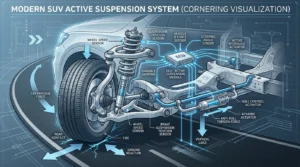
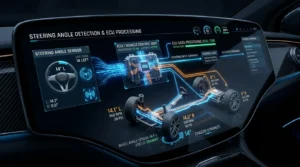
The system depends on multiple components working together in real time. Sensors continuously monitor steering angle, vehicle speed, and lateral force. This data is sent to a central control unit that processes driving conditions instantly. Hydraulic actuators or electronic suspension adjusters respond by applying corrective force. Stabilizer bars distribute this force across the chassis to maintain balance. Each component works in sync to maintain consistent handling during cornering.
How Active Cornering Enhancement Works Step by Step
When a driver enters a turn, the system detects steering input and vehicle movement instantly. The control unit evaluates whether the vehicle is experiencing excessive body roll. If needed, hydraulic pressure is adjusted in the suspension system to counterbalance the force. This correction happens within milliseconds and continues throughout the turn. The system constantly recalibrates based on road conditions, speed, and steering behavior. As a result, the vehicle remains more stable and controlled even during aggressive cornering.
Physics Behind Cornering Stability
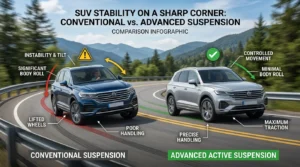
Cornering creates a lateral force that pushes the vehicle outward due to inertia. This force shifts weight to one side, causing the body to lean. Understeer occurs when the front wheels lose grip, while oversteer happens when the rear wheels lose control. Both conditions reduce stability. Vehicle dynamics systems are designed to manage these forces by redistributing load and adjusting suspension response. Active cornering enhancement reduces instability by counteracting body roll and improving tire contact with the road surface.
Comparison with Electronic Stability Control and Traction Control
Each safety system serves a different purpose within vehicle control architecture. Electronic Stability Control intervenes when the vehicle begins to skid. Traction control prevents wheel spin during acceleration on slippery surfaces. Active cornering enhancement focuses specifically on reducing body roll during turns and improving cornering balance. Although they operate differently, these systems work together to maintain full vehicle stability under varying conditions.
Real Driving Scenarios Where Active Cornering Enhancement Works
This system becomes most noticeable during real-world driving situations. On highways, it reduces body lean during fast lane changes. In wet conditions, it helps maintain traction by stabilizing weight distribution. During emergency maneuvers, the system quickly adjusts suspension response to keep the vehicle balanced. SUVs benefit significantly due to their higher center of gravity. Overall, the system improves driver confidence in challenging driving environments.
Advantages of Active Cornering Enhancement
Active cornering enhancement improves vehicle control by reducing unwanted body movement during turns. It increases passenger comfort by minimizing sudden leaning. Grip levels improve because tires maintain better contact with the road. SUV stability becomes significantly better, especially at higher speeds. The system also enhances overall handling precision in both city and highway driving.
Limitations and Maintenance Considerations
The system depends on accurate sensor readings and properly functioning hydraulic or electronic components. If sensors become misaligned, performance may decrease. Hydraulic systems require proper maintenance to avoid pressure loss or leakage. Complex integration with other stability systems can also make repairs more technical compared to standard suspension setups.
Common Problems in Active Cornering Systems
Some vehicles may show warning indicators when stability systems detect faults. These issues often result from sensor errors, ECU communication failures, or worn suspension components. Hydraulic pressure imbalance can also reduce efficiency during cornering. Regular inspection ensures the system continues working correctly under all driving conditions.
Vehicles That Use
Manufacturers commonly install this system in SUVs, luxury vehicles, and off-road capable models. Different brands use different naming conventions, but the core function remains the same. It is often included as part of advanced suspension and stability packages designed to improve ride comfort and safety.
Future of Active Cornering Enhancement Systems
Future systems are moving toward fully electric and AI-assisted suspension control. Electric actuators will replace traditional hydraulic systems for faster response and better efficiency. Integration with autonomous driving systems will allow predictive adjustments before a turn even begins. Active cornering enhancement will evolve into a fully adaptive chassis control system that responds intelligently to road conditions.
FAQs
What does active cornering enhancement do?
It reduces body roll during turns and improves vehicle stability.
Is it the same as traction control?
No, traction control manages wheel spin while this system manages cornering stability.
Does it improve safety?
Yes, it reduces rollover risk and improves control during sharp turns.
Is it only used in SUVs?
No, but it is more common in SUVs due to higher center of gravity.
Final Note
Active cornering enhancement is part of a broader vehicle stability system that combines mechanical and electronic technologies. It improves safety, comfort, and handling by controlling body movement during cornering and ensuring better tire contact with the road.





Leave a Reply